
Water Damage Restoration
Water spreads fast—behind walls, under floors, and into materials. We dispatch 24/7 to extract water, dry your property, document everything for insurance, and coordinate repairs when needed.
- Available 24/7/365
- 1-Hour Emergency Response Time
- We Work With Every Insurance Carrier
Request Help
Standing by 24/7 to answer your call.
1-Hour Response Time
24/7/365 Availability
We Handle All Insurances
Certified Mitigation Experts
Professional Standards
Safe Work. Clean Results. Clear Communication.
Restoration should be done with safety, containment, and documentation in mind—especially when insurance is involved.
Containment + Protection Practices
Controlled work areas and protective materials to help prevent spread and protect unaffected areas.
Moisture Tracking + Documentation
Readings and notes that support quality outcomes and reduce uncertainty.
Clear Scope + Ongoing Communication
A straightforward plan and regular updates so you know what’s happening and why.
Jobsite Care + Clean Finish
Respect for your home—protection for floors, walls, and contents during work.
IICRC Certified
We follow recognized restoration standards for safer work practices, cleaner jobsites, and consistent documentation—especially for insurance-related projects.

- For Any Emergency Call National Disaster Response, LLC • Free inspection • 24/7 dispatch • 1-hour response.
Water Damage Restoration Services
Water damage spreads fast—often behind walls and under floors. NDR responds 24/7 to stop the loss, dry the structure correctly, and document everything so repairs (and insurance) move forward without delays.
Emergency Water Extraction
We remove standing water quickly using professional extraction equipment to reduce spread and prevent additional damage to floors, walls, and contents.
Drying & Dehumidification
We set commercial air movers and dehumidifiers, then track moisture levels until targets are met—so the structure is truly dry before repairs begin.
Repair & Rebuild Coordination
After dry-out is verified, we coordinate repairs—drywall, flooring, trim, cabinets, paint—so you’re not stuck between mitigation and reconstruction.
Common Water Damage Scenarios We Handle
Whether it’s a sudden flood or a slow leak, the priority is the same: stop the loss, document conditions, and dry the structure the right way. NDR responds 24/7 across Utah County and Salt Lake County to stabilize the situation fast and keep the restoration moving.
- Burst Pipes & Plumbing Failures
- Appliance, Water Heater & A/C Leaks
- Roof Leaks & Storm Intrusion
Water damage often spreads beyond what you can see. We use moisture mapping and daily readings to find hidden moisture in walls, floors, and insulation—then verify dry-out before repairs begin.
In an emergency: prioritize safety first.
Do This
- Turn off the water source (main valve or fixture shutoff) if you can do it safely.
- Avoid electrical hazards—if water is near outlets/appliances, shut off power at the breaker only if safe and stay out of standing water.
- Take a few quick photos/video of the affected areas before moving anything (helps with insurance).
- Move valuables up and out of the wet zone (electronics, important papers, rugs, small furniture).
- Blot / contain small water spread with towels and buckets (only if it’s clean water and safe).
- Ventilate if weather allows (open windows/doors) to reduce humidity while you wait.
- Call for 24/7 dispatch ASAP so extraction and drying can start quickly.
- Write down what happened (when you noticed it, where it started)—small details help later.
Don't Do This
- Don’t enter rooms with standing water if electricity might be involved—this is the #1 danger.
- Don’t use household vacuums to remove water (shock risk + not designed for it).
- Don’t start demolition (pulling drywall/flooring) before documentation and a moisture assessment—hidden moisture gets missed and claims get messy.
- Don’t assume “it looks dry” means it’s dry—moisture hides behind walls and under floors.
- Don’t crank the heat to “dry it out” (can worsen humidity and warping if not controlled).
- Don’t run random fans at wet walls if you don’t know what’s behind them (can push moisture deeper in some assemblies).
- Don’t ignore odors or staining—that often means moisture has traveled and needs proper drying/sanitizing.
- Don’t wait overnight—delays can increase damage and the chance of microbial growth.
- For Any Emergency Call National Disaster Response, LLC • Free inspection • 24/7 dispatch • 1-hour response.
Our Process: Swift, Thorough, Proven
Here’s how our 24/7 emergency restoration process works. We’re with you every step of the way.
Advanced Methods And Equipment
We use professional-grade equipment and advanced technicuqesto mitigate damage and dry out properties quickly, safely, and thoroughly
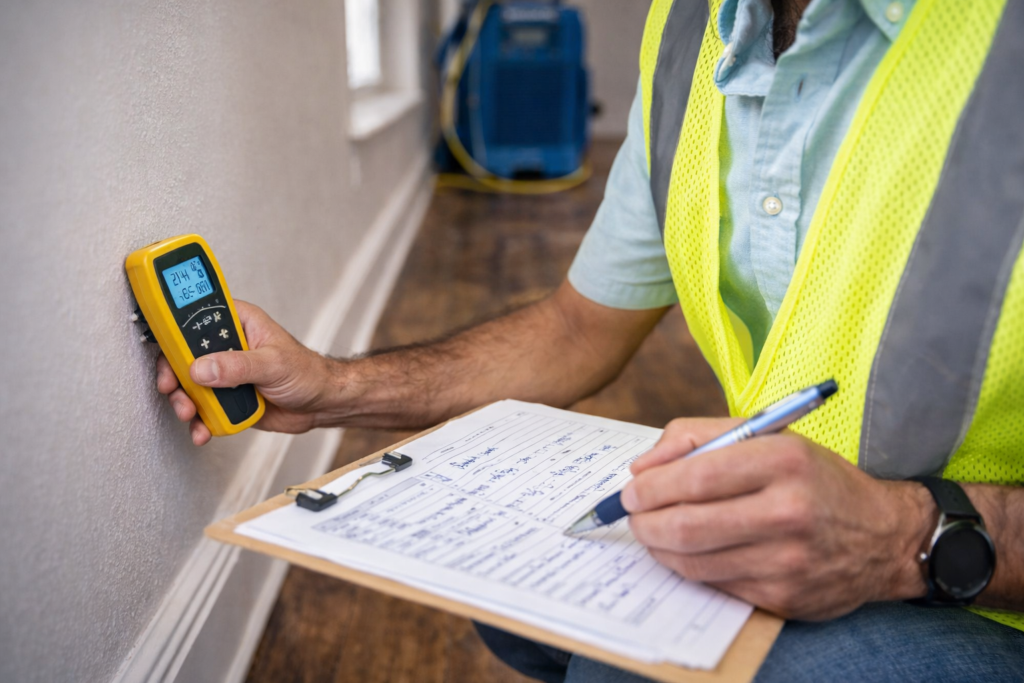
Moisture Mapping & Thermal Imaging
We find moisture you can’t see—behind drywall, under flooring, and in insulation—so nothing is missed and drying is targeted.
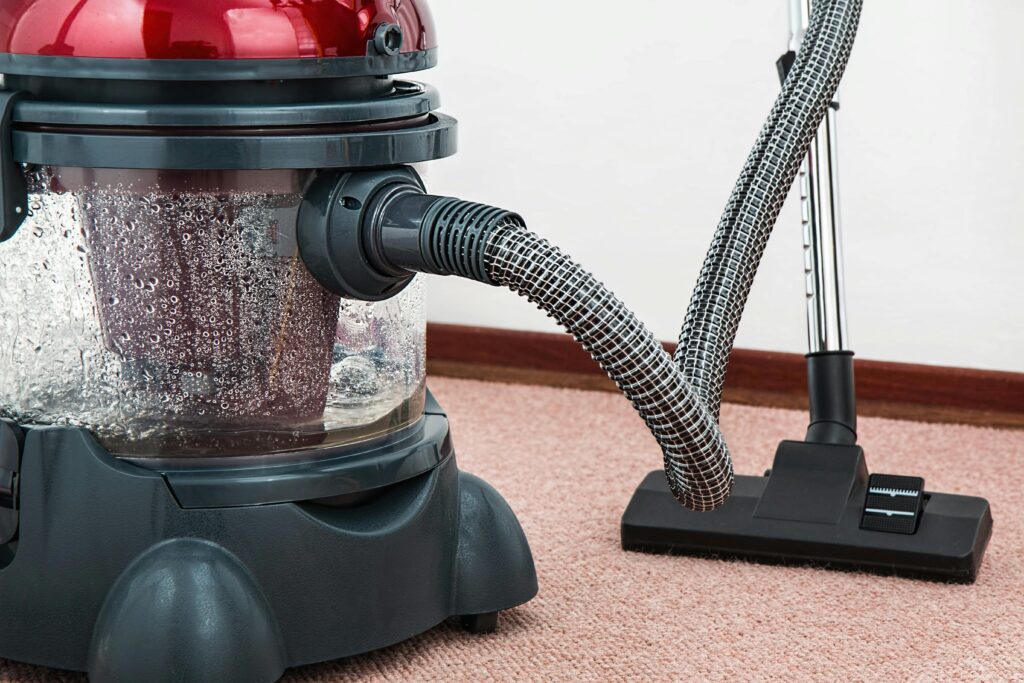
High-Power Water Extraction
Pumps and extraction tools remove standing water fast, helping reduce saturation and limit damage to floors, walls, and contents.
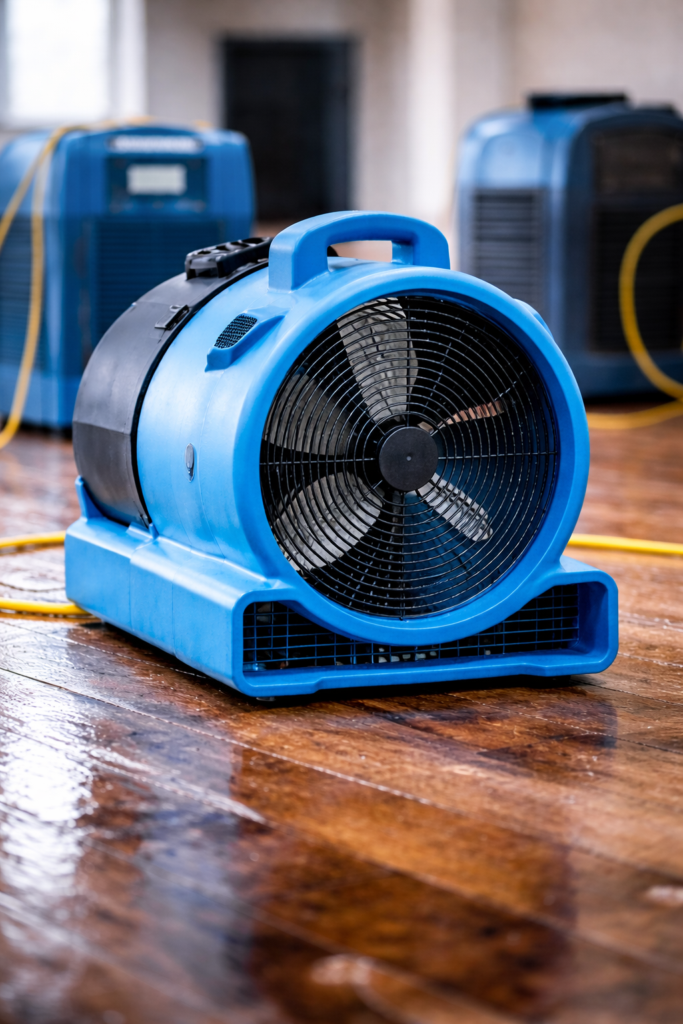
Commercial Drying & Dehumidification
Air movers and dehumidifiers pull moisture out of materials and the air. We adjust equipment based on daily moisture readings until targets are met.
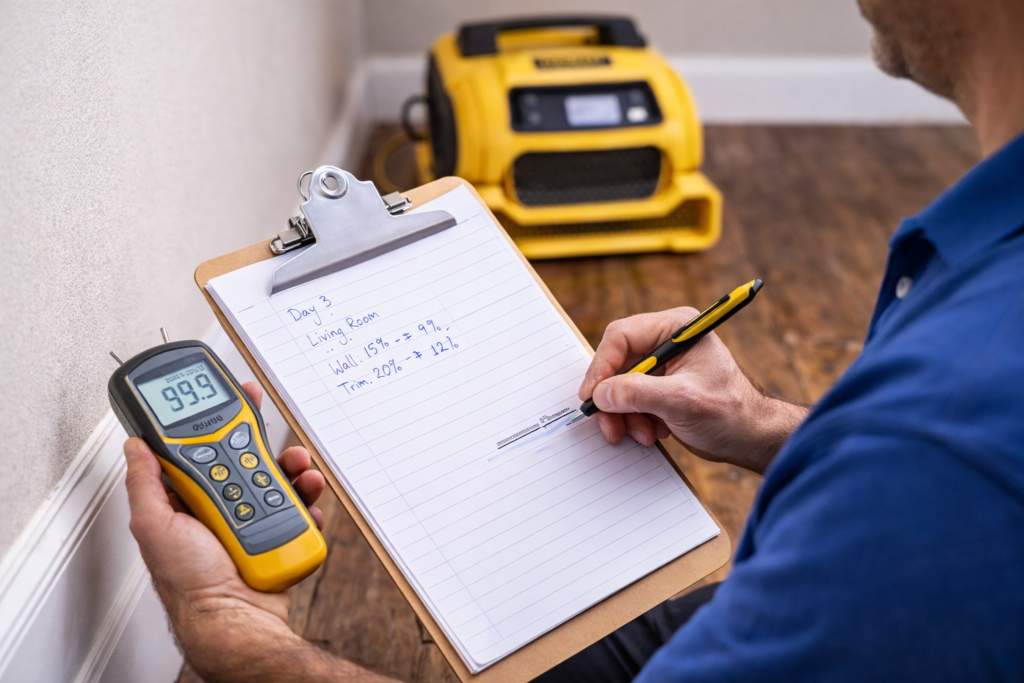
Daily Monitoring & Dry-Out Verification
We document progress with moisture readings and clear notes—so the property isn’t rebuilt too early and the restoration stays on track.
Start With NDR — We’ll Handle the Insurance Process
Call us first. We document the damage, build a claim-ready file, and coordinate with your carrier so nothing gets missed.
- We work with all major insurance carriers
- We document the loss from day one
- We communicate directly with the adjuster (when assigned)
- We help you avoid unnecessary out-of-pocket costs, where coverage allows
What We Need From You:
- Carrier name + policy number (if available)
- Any claim info you already have (if you’ve filed)
- Photos you can safely take before we arrive
- For Any Emergency Call National Disaster Response, LLC • Free inspection • 24/7 dispatch • 1-hour response.
Frequently Asked Questions
Here are quick answers to the most common questions we hear on this service.
We’re available 24/7/365 and prioritize emergency dispatch. Response time depends on location and current conditions, but we aim to get a crew to you as quickly as possible—often within the hour.
If it’s safe, yes—shut off the water at the nearest valve or the main. If water is near outlets, appliances, or the panel, avoid standing water and don’t take risks—call us and we’ll guide next steps.
You can move small valuables out of the wet area and place towels/buckets to contain spread. Avoid demolition (pulling drywall/flooring) or major cleanup until documentation and a moisture assessment are done—especially if insurance is involved.
Drying time depends on the materials affected, how far moisture traveled (often behind walls/under floors), and how quickly the loss was discovered. We take moisture readings and adjust equipment until dry-out targets are met—then we verify before repairs begin.
Yes. We work with insurance-related projects regularly and support the process with photo documentation, moisture readings, and clear notes. If you already filed a claim, have your claim number ready.
Sometimes. If water reached insulation, soaked drywall, or got under certain flooring types, controlled removal may be needed so the structure can dry properly. We only remove what’s necessary and explain why before work begins.
We use moisture meters and targeted inspection to locate water that’s traveled behind drywall, under baseboards, or beneath flooring. That way drying is focused where it needs to be—not just where you can see damage.
If it’s safe: shut off the water, avoid electrical hazards, take a few photos/video, and move valuables to a dry area. Don’t use a household vacuum for standing water and don’t start demolition.
It can. The risk increases when materials stay wet. The best prevention is fast extraction and professional drying with monitoring—so moisture is actually removed, not just “aired out.”
Yes. After dry-out is verified, we can coordinate repairs and reconstruction so you’re not stuck finding a separate contractor once the equipment comes out.
The NDR Response Standard
What You Can Expect Every Time You Call NDR
When your property is damaged, consistency matters. Our team follows a defined standard built around speed, clarity, and documented work.
Rapid Dispatch + Clear Next Steps
Fast response, clear assessment, and a straightforward plan so you know exactly what happens next.
Photo Documentation for Insurance
Job photos and notes that help support the claim and reduce confusion during the process.
Daily Progress Updates
Simple updates on timeline, drying status, and what’s happening each day.
Moisture Monitoring + Verification
Ongoing readings and verification so drying targets are met before moving forward.
Clean, Protected Jobsite (Containment)
Protective materials and controlled work areas to minimize disruption and protect unaffected areas.
Rebuild Coordination (When Needed)
When repairs are required, we coordinate next steps so restoration doesn’t stall after mitigation.
Start Here
Call NDR First — We’ll Build the Documentation Your Claim Needs
Before you file a claim, let us inspect and document the loss the right way. We capture photos, readings, and scope notes so you have clear, claim-ready proof of what was impacted and why.
What We Provide
- Photo documentation (before, during, and after)
- Moisture readings + drying progress logs
- Scope notes for affected materials/areas
- Adjuster-ready summary + communication support
What We Recommend You Keep
- Insurance carrier + policy number (if available)
- Photos you can safely take before we arrive
- When the damage started / when you discovered it
- A basic list of impacted contents (if applicable)
If it’s safe, stop the source and take a few photos — then call NDR. Avoid DIY removal until documentation is captured.
- For Any Emergency Call National Disaster Response, LLC • Free inspection • 24/7 dispatch • 1-hour response.
Service Area
Serving Utah County & Salt Lake County
National Disaster Response currently provides service throughout Utah with priority coverage in Utah County and Salt Lake County. Additional areas may be available by request.
- Utah County priority dispatch
- Salt Lake County priority dispatch
- Surrounding areas by request
- 24/7 emergency response available
Common service areas include
- Salt Lake City
- West Valley City
- West Jordan
- Sandy
- South Jordan
- Herriman
- Millcreek
- Taylorsville
- Murray
- Draper
- Riverton
- Kearns
- Midvale
- Magna
- Cottonwood Heights
- Provo
- Lehi
- Orem
- Eagle Mountain
- Saratoga Springs
- Spanish Fork
- American Fork
- Pleasant Grove
- Springville
- Payson
- Highland
- Santaquin
- Bluffdale
- Vineyard
- Alpine
If you’re unsure whether you’re in our service area, call—we’ll confirm dispatch availability right away.
Explore More Services
More Ways We Can Help
Damage rarely stays isolated. If you’re dealing with multiple issues, our team can help
Water Damage Mitigation
Extraction, drying, dehumidification, and repair coordination.
Fire & Smoke Restoration
Cleanup, odor control, and restoration planning after a fire.
Mold Remediation
Containment, removal, and prevention-focused recommendations.
Rebuild & Reconstruction
From minor repairs to full rebuild coordination after mitigation.
Hoarder House Cleanouts
Cleanup, hauling, sanitizing, and property reset support.
Emergency Board-Up & Tarping
Immediate protection after storms, break-ins, or fire—boarding windows/doors and tarping roofs to prevent further damage until repairs begin.
Need Help Right Now?
Call National Disaster Response 24/7 for fast dispatch and a clear plan. We’ll help stabilize the situation and guide the next steps—mitigation through rebuild coordination when needed.
- 24/7 emergency response
- Clear next steps and documentation
- Utah County & Salt Lake County priority coverage
If you have an existing claim number, please have it available.